
Casebook Info
In February 2025, the Swedish Supreme Court dismissed the Aurora case, a groundbreaking climate lawsuit brought by over 600 young Swedes against their government for inadequate climate action. The case, filed in 2022 and heavily influenced by the European Court of Human Rights’ landmark Klimaseniorinnen ruling, sought to compel Sweden to take stronger measures to combat climate change based on human rights violations under the European Convention on Human Rights.
The Supreme Court ruled that while climate lawsuits might be possible in Sweden, this particular case failed on two critical grounds: the individual plaintiffs lacked the standing requirements established by the European Court, and the Court could not order specific government climate measures without violating Sweden’s constitutional separation of powers. Despite the dismissal, the court explicitly left the door open for future climate cases brought by qualified associations seeking declarations of rights violations rather than specific government actions.
- Year Filed 2022
- Year of Most Recent Ruling 2025
- Year of Final Ruling 2025
- Jurisdiction Sweden
- Court Name Supreme Court
- Primary Focus Mitigation
- Ruling On Merits
- Plaintiff(s) Youth, NGO
- Respondent(s) Sweden
- Outcome Decided
- Organizational leader of the litigation N/A
- Link to the decision/ruling
Background
Second-Guessing Sweden’s ‘Climate Leader’ Claims
Sweden has long positioned itself as a global climate leader, declaring ambitious emissions reduction targets and renewable energy policies. In the last half-decade, however, climate activists have increasingly argued that Sweden’s in-practice actions are insufficient to meet its commitments under the Paris Agreement and to limit global warming to 1.5°C. Young climate activists, inspired by Greta Thunberg’s global movement and led in part by Thunberg herself, began seeking legal avenues to challenge government climate policy.
The Aurora case followed two letters sent to the Swedish government in 2022 which unsuccessfully requested enhanced climate action. When the government failed to respond adequately, particularly after a change in government in October 2022, over 600 young people – organized through the Aurora association – decided to file a class action suit at the Nacka District Court in November 2022.
In 2023 the District Court, recognizing that the suit presented novel legal questions, referred the case to the Supreme Court to determine whether the climate litigation could proceed under Swedish law. This referral process delayed substantive consideration of the merits for over two years. The Aurora case unfolded against the backdrop of escalating climate impacts in Sweden, including unprecedented forest fires, flooding, and temperature extremes. This context was crucial: the plaintiffs argued that the risk of negative climate change impacts constituted interference with their rights to life, private and family life, and non-discrimination under the European Convention on Human Rights (ECHR). The case also represented a convergence of youth activism, legal strategy, and climate science, with the Aurora association coordinating street demonstrations alongside courtroom proceedings to maintain public pressure for climate action.
Insufficient Climate Action
The Aurora plaintiffs advanced several interconnected legal claims against the Swedish state, all grounded in alleged violations of the ECHR. First, they argued that Sweden’s inadequate climate action violated Article 2 (right to life) by exposing them to present and future life-threatening climate impacts, including extreme weather events, heat waves, and ecosystem collapse. Second, they claimed violations of Article 8 (right to respect for private and family life) based on how climate change would disrupt their living conditions, health, well-being, and quality of life. Third, they alleged discrimination under Article 14 by arguing that climate impacts disproportionately affect young people, creating discriminatory treatment based on age. Finally, they invoked Article 1 of Protocol 1 (protection of property) due to climate-related threats to their future property interests.
The plaintiffs argued that Sweden had failed to calculate its “fair share” of global greenhouse gas emissions and to adopt emissions reductions aligned with the best available science and the 1.5°C temperature target. Specifically, they requested two primary forms of relief:
- (1) a declaratory judgment that the Swedish state had violated their ECHR rights by failing to take sufficient measures to combat climate change and achieve stated climate goals, and
- (2) alternatively, a mandatory order requiring the state to adopt specific measures to reduce greenhouse gas concentrations in the atmosphere.
The Supreme Court’s Judgment
The Swedish Supreme Court dismissed the Aurora case on February 19, 2025, but its reasoning was nuanced and established important precedential guidelines for future climate litigation. The court’s analysis proceeded through several critical legal determinations.
On the threshold question of standing, the Supreme Court applied the victim status test established by the European Court of Human Rights in Verein KlimaSeniorinnen Schweiz and Others v. Switzerland (2024). The Court found that the individual Aurora plaintiffs failed to meet the demanding requirements for individual standing in climate cases, which require applicants to show both ‘high intensity of exposure to the adverse effects of climate change’ and ‘a pressing need‘ to ensure the applicant’s individual protection. Crucially, the Court noted that “the action brought before the Nacka District Court is not brought by an association, but by a person who is bringing the action on behalf of individuals” and that the plaintiffs had not invoked circumstances demonstrating that the risk of negative consequences of climate change is particularly serious for them.
However, the Court explicitly recognized that climate lawsuits could potentially proceed in Sweden if brought by qualified associations meeting the criteria established in Klimaseniorinnen.
On the substantive constitutional question, the Supreme Court applied Sweden’s separation of powers doctrine (Regeringsformen) to determine the permissible scope of judicial intervention in climate policy. The Court distinguished between two types of potential climate claims: those seeking declarations of rights violations (potentially permissible) and those seeking mandatory orders for specific government actions (impermissible). The Court ruled that the plaintiffs’ claim asking the district court to determine whether the State had violated the Convention rights of the group members by not taking certain listed measures to achieve certain stated objectives was not admissible due to this separation of powers.
Most significantly, the Court held that it was not for a court to decide whether the Riksdag or the government should take any specific measures, finding that it was the place of Sweden’s political bodies to decide independently what specific climate measures Sweden should pursue. This constitutional limitation meant that the Aurora plaintiffs’ request for mandatory climate action exceeded the judicial branch’s constitutional authority.
The Court left open the possibility that future climate cases could succeed if properly formulated. This created a narrow but potentially viable pathway for future climate litigation in Sweden, provided that cases are brought by qualified associations and seek only declarations of rights violations rather than specific policy mandates.
- 600+ initial youth signatories formed the basis for the lawsuit
- 1996-2015 the generational cohort represented by the plaintiffs
Strategies
Focusing on youth and future generations

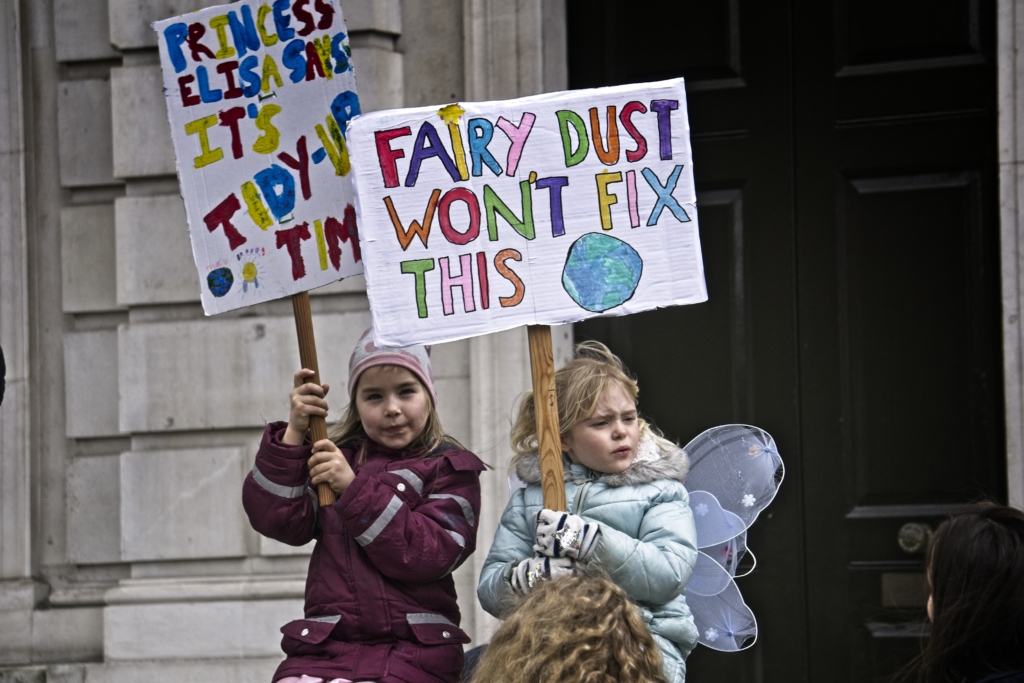
The Aurora case centered explicitly on young plaintiffs born between 1996 and 2015, emphasizing how climate change disproportionately affects younger generations who will live with the long-term consequences of current government decisions. The group of over 600 young people filed the class action lawsuit arguing that Sweden’s inadequate climate action violated their rights under the European Convention on Human Rights. This strategy aligned with global youth climate movements and sought to establish that young people have particular standing to challenge climate policies due to their heightened vulnerability to future climate impacts.
Centering rights
The Aurora plaintiffs’ legal strategy was fundamentally grounded in human rights law, specifically invoking Articles 2 (right to life), 8 (right to private and family life), 14 (non-discrimination), and Article 1 of Protocol 1 (right to property) of the European Convention on Human Rights. The plaintiffs argued that Sweden’s failure to take adequate climate action constituted violations of these fundamental rights by exposing them to present and future climate harms.
This rights-based approach was directly inspired by the European Court of Human Rights’ Klimaseniorinnen ruling in April 2024, which established that climate change can violate the right to respect for private and family life contained in Article 8 of the Convention based on a State’s failure to mitigate the impact of climate change on the lives, health, well-being and quality of life of its citizens. While the Swedish Supreme Court acknowledged this precedent, it emphasized that such rights claims must be carefully formulated to avoid encroaching on political decision-making authority.
Bringing the case in a more favorable venue / jurisdiction.

The Aurora plaintiffs strategically chose to file their case in Swedish courts rather than immediately pursuing international human rights venues, anticipating that domestic courts might be more responsive to national climate policy failures. They specifically filed in the Nacka District Court, and the case structure appeared designed to benefit from Sweden’s generally progressive legal environment and strong rule of law tradition.
Additionally, the timing of the case was strategically chosen to follow the European Court of Human Rights’ Klimaseniorinnen decision in April 2024, allowing the plaintiffs to cite binding European precedent on climate and human rights. However, this strategy ultimately revealed the limitations of direct transplantation of international precedents into domestic constitutional frameworks, as the Swedish Supreme Court found that constitutional separation of powers constraints prevented the courts from ordering specific climate measures regardless of European human rights law.
Takeaways
1. Association standing is crucial: Future climate cases should be brought by qualified associations rather than individual plaintiffs to meet European Court standing requirements
2. Narrow legal claims work better: Courts may be more receptive to claims seeking declarative relief rather than demands for specific government actions (or demands which ask courts to evaluate the adequacy of specific government actions).
3. Constitutional constraints matter: Each State jurisdiction’s ‘separation of powers’ doctrine, for those that have them, will limit how courts can respond to climate cases, regardless of international precedents. International human rights decisions provide important frameworks, but don’t override domestic constitutional constraints.
4. Political mobilization remains essential: Legal strategies must be combined with continued political advocacy, since courts are no substitute for legislative action.
Impacts
On-the-Ground Impacts:
The Supreme Court’s dismissal meant no immediate implementation requirements for the Swedish government. However, the ruling’s nuanced approach has kept the door open for future litigation. Following the Supreme Court’s decision, the case was remitted to the Nacka District Court, and on April 14, 2025, a request was made to transfer the claim from the individual applicants to the association Aurora. This procedural move represents an attempt to continue the case under the association standing framework that the Supreme Court suggested might be permissible.
The Swedish government has not been required to adopt any new climate measures as a direct result of this case, but the ongoing legal pressure and public attention have maintained climate policy in the political spotlight during a period of governmental transition.
Legal Impacts:
The Aurora case represents the first systematic attempt by a national supreme court to apply the European Court of Human Rights’ Klimaseniorinnen precedent in domestic climate litigation, providing crucial guidance for future climate cases across Europe.
The Supreme Court’s ruling established important precedential boundaries for climate litigation in Sweden while simultaneously creating pathways for future cases. The Court’s distinction between permissible declarations of rights violations and impermissible orders for specific government action will likely influence climate litigation strategy throughout Europe. The ruling also demonstrated how constitutional separation of powers doctrines can limit climate litigation even where international human rights law provides supportive precedents, highlighting the complex interaction between international and domestic legal frameworks in climate governance.